The Sauternes wine appellation has a rich and captivating history going back many centuries. Located in the Bordeaux wine region, south-east of Bordeaux, the Sauternes vineyards are renowned for producing sweet wines of exceptional quality. The history of Sauternes is littered with stories of visionary winemakers who harnessed nature’s blessings to create exceptional wines. To discover the fascinating history of Sauternes is to delve into the secrets of this miraculous vineyard and understand the factors that have contributed to its international renown.
Botrytis, a miraculous mushroom
So what is so special about this vineyard? Botrytis Cinerea is a mushroom that thrives in specific climatic conditions, where morning humidity and fog, blessed by the River Ciron, meet ripe grapes. Botrytis affects the skin of grapes, causing small lesions that lead to evaporation of water and concentration of sugars. This high sugar content is essential for making sweet and liquorous Sauternes wines, giving the palate its characteristic sweetness and richness. In terms of sensory details, these wines present notes of honey, apricot, exotic fruit and flowers, offering a rich, seductive aromatic palette.
Bunch of grapes affected by Bortytis
tHE DIFFERENT STAGES FROM GRAPE TO BOTTLE
The grapes used to produce Sauternes wines are white, mainly Sémillon, with a small proportion of Sauvignon Blanc and Muscadelle. Harvesting is selective, picking only grapes affected by noble rot. After harvesting, the grapes are carefully sorted so that a second selection can be made to retain the affected bunches.
This guarantees the quality and concentration of the grapes used for vinification. The third stage involves gentle pressing to preserve the aromas and characteristics of the grapes. Then the mixture is transferred to the alcoholic fermentation tank to transform the sugars into alcohol. Fermentation times vary from one winery to another.
Once this stage has been validated, the wine is transferred to oak barrels, where it ages for a variable period, generally from 18 to 36 months. After barrel aging, the different batches of wine from the different parcels are blended to create the final wine. The blend may include wines from different years to maintain a consistent style and quality.
Finally, for most Sauternes cuvées, tasting does not take place immediately after bottling. Sauternes wines are often aged in bottles for several years before they are released on the market. This additional aging allows the aromas and flavors to develop further, creating more complex, balanced wines.
Grapes into a fermentation tank
Crystal cask filled with wine from Château Lafaurie-Peyraguey in Sauternes to celebrate the estate's 400th anniversary.
Château Guiraud wine bottles
Sauternes grands crus
But then, how can we talk about Sauternes wines without mentioning its major figures First and foremost, Château d’Yquem. This is surely the most famous and prestigious estate in Sauternes. It is renowned for producing exceptional sweet wines and is considered the greatest Sauternes wine. Its wines are renowned for their richness, complexity and ageing capacity, as we have just learned. Château Lafaurie-Peyraguey, located in Bommes, is a historic Sauternes estate dating back to the 13th century! The château has had different owners over the centuries, but is currently owned by Silvio Denz, a Swiss entrepreneur with a passion for wine. Lafaurie-Peyraguey wines are renowned for their richness, complexity and elegance. Finally, Wine Cab recommends the famous Château Sigalas-Rabaud, also located in Bommes. Sigalas-Rabaud wines are renowned for their elegance, freshness and aromatic complexity, with surprising notes of exotic fruits, honey and spices.
Château d'Yquem, Sauternes appellation
One of our cabs in Sauternes
A UNIQUE TOUR IN PRESTIGIOUS APPELLATION
Too often overshadowed by the great names such as Saint-Émilion or Médoc, Sauternes wines are still not recognized for their true worth.
That’s why Wine Cab offers you the chance to discover these vineyards with visits to châteaux selected for the quality of their wines and their history. If you’re looking for an exclusive tour off the beaten track, and are drawn to delicate, flavorful wines of great elegance, contact us so we can create a tailor-made tour for you.
Book your wine tour of the prestigious Sauternes estates now and enjoy an unforgettable Bordeaux wine tasting experience.
Amphorae, thousand-year-old containers to enhance wine
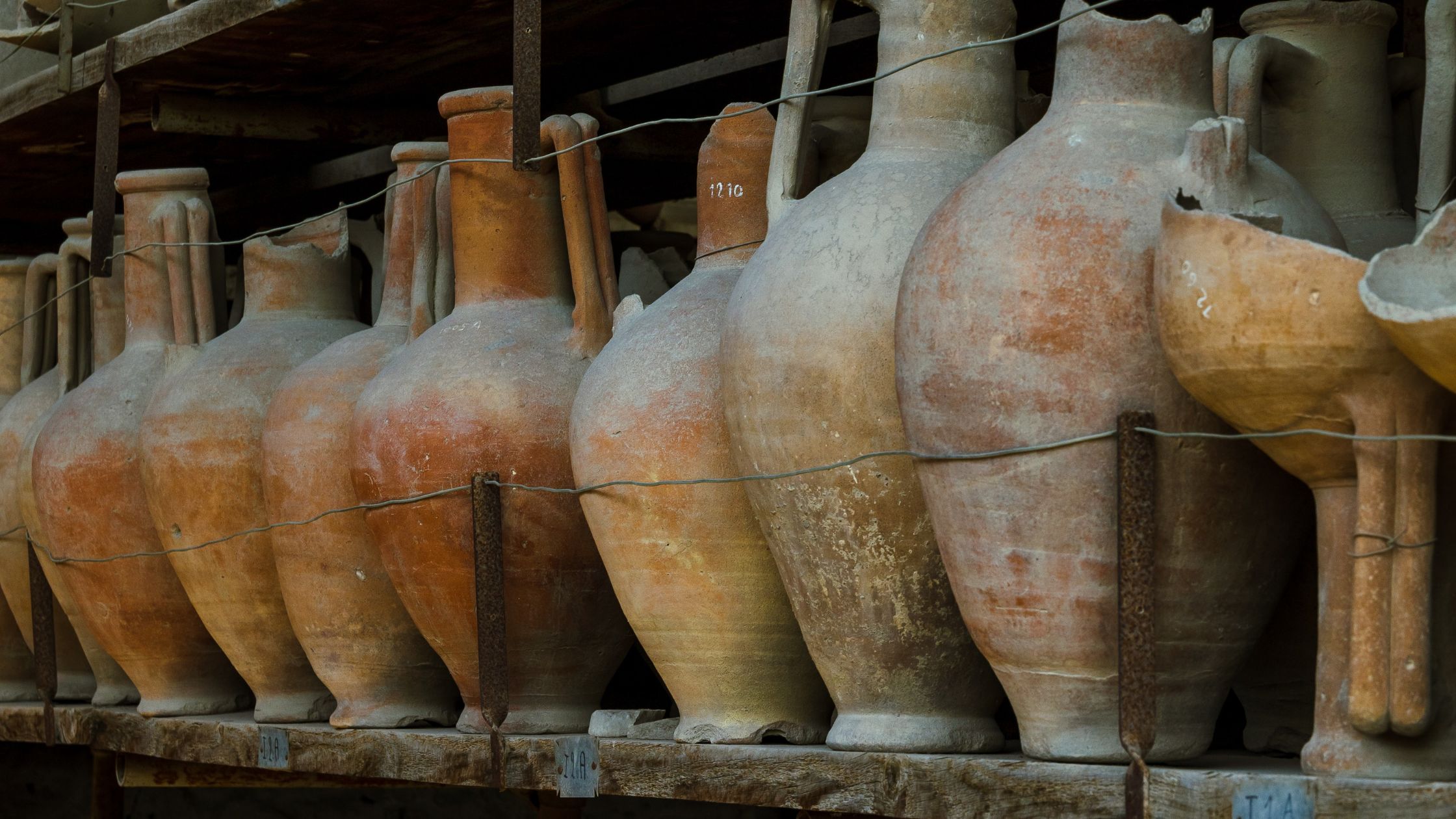
For millennia, amphorae have been used for winemaking. These unglazed clay containers have survived the centuries and are still used by some winemakers to produce unique wines. Amphorae allow for gentle fermentation and interaction with ambient air, giving rise to wines with earthy and mineral aromas, as well as a complex and rich texture.
The origin of the amphora
Amphorae have a long history dating back to ancient times. The first models date back to the 3rd millennium BC and were discovered in Egypt, Greece, Italy, and Spain. These fired clay containers were used to store and transport a variety of products, including wine. The first evidence of amphorae being used for winemaking was found in Greece, where they were used as early as the 7th century BC.
Over the centuries, the use of amphorae for winemaking spread throughout the Mediterranean, particularly in the wine regions of Greece and Italy. The Romans also adopted this practice and began exporting wines stored in amphorae throughout Europe.
In France, the use of amphorae for winemaking arrived with the Romans, who introduced this practice in the wine regions of southern France, including Provence. In Bordeaux, amphorae were used for winemaking as early as the Gallo-Roman period, over 2000 years ago.
Their use then declined in Europe, as other winemaking and storage methods, such as oak barrels, became more popular. However, the use of amphorae for winemaking has experienced a resurgence in recent decades, particularly in the most innovative wine regions, such as Bordeaux.
Illustration of ancient amphorae used to serve wine.
Barrel or Amphorae ?
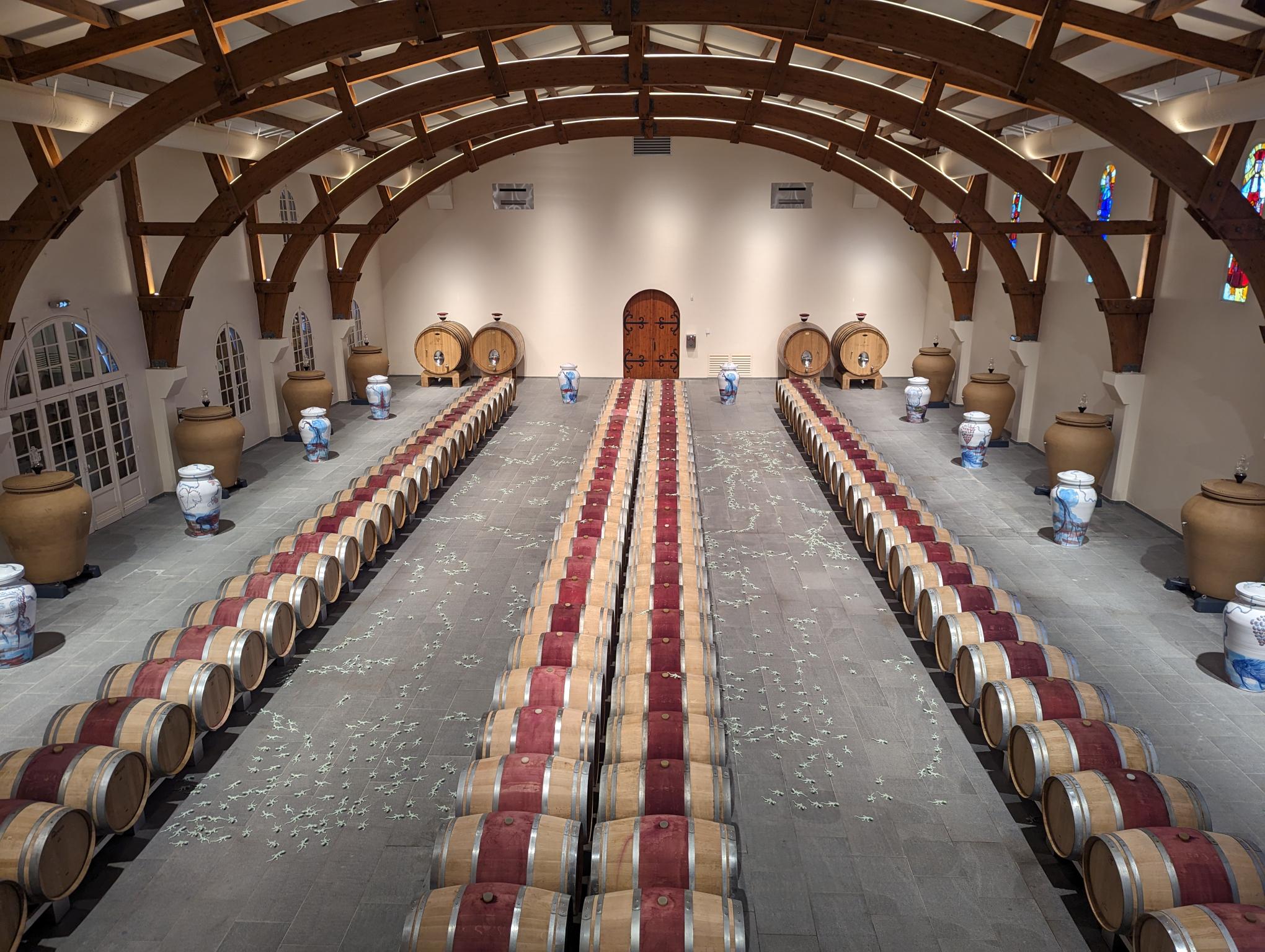
When it comes to choosing between barrels and amphoras, it largely depends on each producer’s preferences and the style of wine they want to achieve. Wooden barrels can impart notes of vanilla, spices, or toasted wood, which can be ideal for powerful red wines or rich and complex white wines. However, it is important to note that barrels can also mask the natural fruity aromas of the wine.
Clay amphoras, on the other hand, have a more subtle impact on the taste of wine. They allow for delicate interaction with the ambient air, resulting in gentle fermentation and the expression of natural grape characteristics. This winemaking method is ideal for light and elegant red and white wines that showcase the finesse and complexity of fruity aromas. It should also be noted that wines aged in amphoras can have a rougher texture and less smoothness than those aged in barrels.
Ultimately, the choice between barrel and amphora depends on the style of wine one wants to achieve. If you prefer subtly aged fruity and light wines, then amphoras could be the ideal choice. If you’re looking for more powerful and aroma-rich wines with woody and spicy notes, then wooden barrels may be more suitable. It is important to taste different types of wines to discover what suits your personal preferences best.
The amphorae and their relationship with the Bordeaux region
Bordeaux is a world-renowned wine region for the quality of its wines. Many Bordeaux wine producers use amphorae to produce unique and complex wines. Classified grand cru chateaux such as Château Palmer and Château Haut-Brion were pioneers in the use of amphorae to produce exceptional wines. The region is known for its clay-limestone soils and the presence of many waterways, which creates a microclimate favorable to vine growing. Bordeaux wines are known for their elegance, aromatic richness, and aging potential. The use of amphorae in winemaking allows for the full expression of the Bordeaux terroir and the production of highly complex wines.
In summary, the use of amphoras has become a widespread practice in the Bordeaux region, allowing for the production of unique and complex wines. If you are in the region, don’t miss the opportunity to discover these ancestral techniques by visiting the cellars, chateaux, and wineries that use amphoras in their winemaking process. You will be able to experience an unforgettable taste experience by tasting wines with mineral and earthy aromas that testify to the richness of the Bordeaux terroir.
Don’t wait any longer to book your wine tour in Bordeaux at https://www.wine-cab.com/our-classic-tours/ and discover the secrets of the wines made thanks to tastings directly from the amphora or the barrel ! Whether you are a wine enthusiast or just curious, you won’t be disappointed by this unique experience that will allow you to discover the richness and diversity of Bordeaux wines.